








- Approved Low-Toxicity Pest Management Products
- Child Safe Pest Control Practices
- Pet Safe Treatment Options Available
- Odourless and Gel-Based Treatment Options
- Free Inspection Before Treatment
- Trained and Certified Technicians
- Residential & Commercial Coverage
What Makes a Pest Control Chemical Safe?
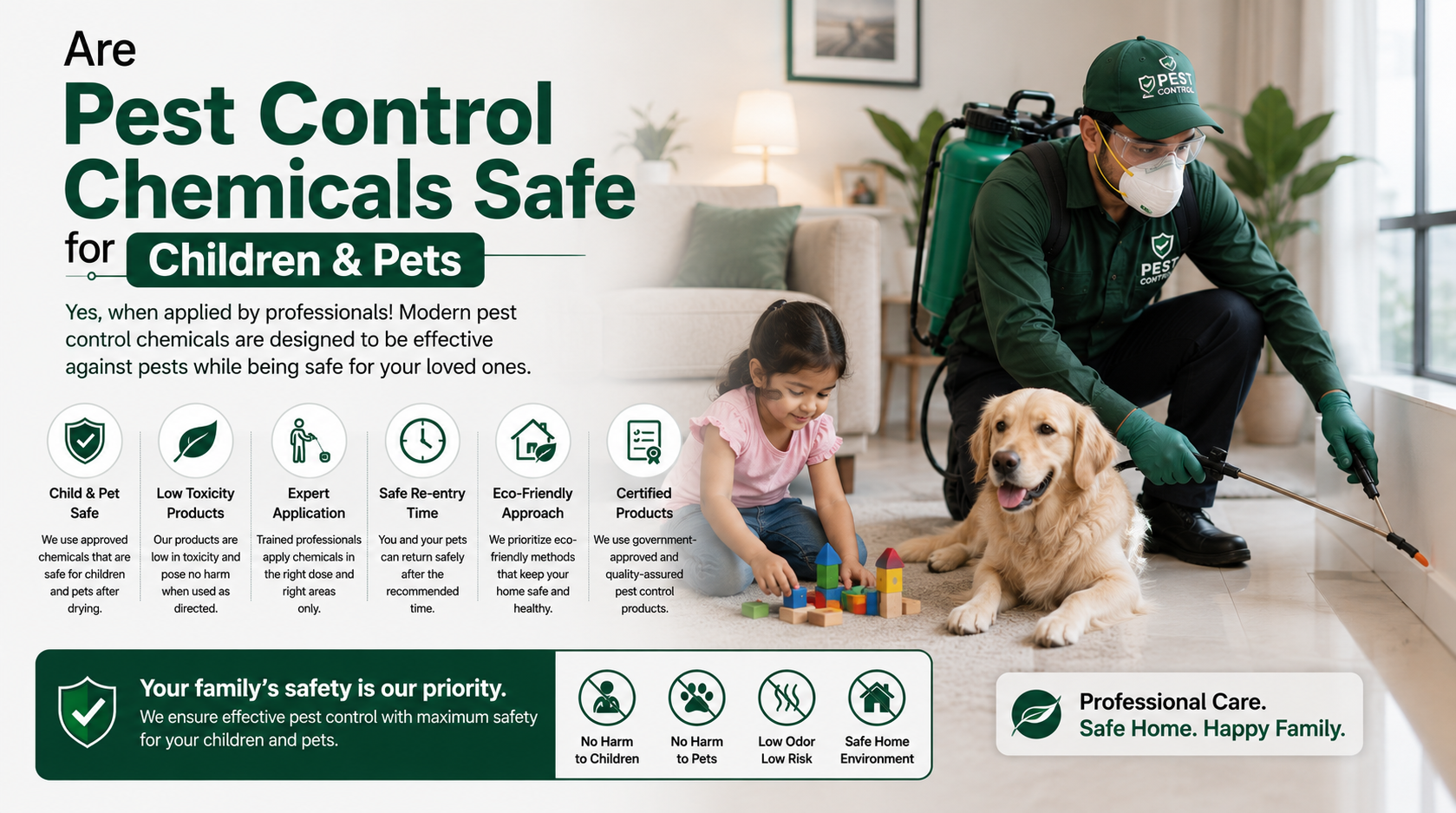
The safety of a pest control chemical depends on three major factors: the formulation used, the concentration applied, and the method of application. Professional pest control companies use approved products designed to target specific pests while reducing unnecessary exposure for humans and pets.
When technicians follow correct treatment procedures, pest control chemicals can effectively eliminate insects and rodents without creating unnecessary risks for families. Different pests require different approaches, which is why professional inspection is important before selecting a treatment method.
-
Correct Chemical Selection:
Professionals choose treatments according to the pest problem, whether it is termites, cockroaches, rodents, mosquitoes, or bed bugs. -
Proper Dosage Application:
Trained technicians apply the recommended quantity instead of using excessive chemical amounts. -
Targeted Treatment Areas:
Modern pest control focuses on cracks, breeding points, nests, and hidden infestation areas rather than unnecessary spraying. -
Safety Instructions:
Experts provide guidance about ventilation, drying time, and when children and pets can safely return to treated areas.
Common Treatments and Their Safety Profile
Different pest problems require different treatment techniques. A professional company does not use the same chemical approach for every infestation. The treatment method depends on pest behaviour, infestation level, and property requirements.
-
Cockroach Control:
Usually involves gel baiting placed inside cracks, corners, and hidden areas. These targeted solutions have low odour and reduce direct contact risks for children and pets. -
Termite Control:
Includes soil and wood treatment applied to affected structural areas. Professional termite treatment focuses on eliminating colonies while protecting furniture and wooden structures. -
Rodent Control:
Uses secure bait stations and controlled placement methods to reduce access for children and pets while managing rodent activity. -
Mosquito Control:
Includes breeding source identification and targeted treatments with recommended ventilation time before re-entry. -
Bed Bug Treatment:
Targets mattress seams, furniture joints, and hidden areas where bed bugs survive, with proper drying time before normal use.
Precautions Before, During, and After Pest Control Treatment
Following basic safety precautions before and after pest control treatment helps minimise exposure risks and ensures better results. Professional technicians guide homeowners about preparation steps and safe re-entry time according to the treatment method used.
| Treatment Stage | Recommended Safety Steps |
|---|---|
| Before Treatment | Cover food items, remove children's toys, and keep pet bowls away from treatment areas. |
| During Treatment | Keep children and pets away from the treatment area until the application process is completed. |
| After Treatment | Allow proper ventilation and avoid touching treated surfaces until they are completely dry. |
| Following Days | Clean frequently touched surfaces if required and follow technician recommendations for long-lasting protection. |
Safety Checklist for Homes With Children and Pets
Homes with babies, pets, or sensitive family members may require additional precautions before scheduling pest control treatment. Informing the technician about these requirements helps them select safer treatment options.
-
Homes With Babies:
Keep infants away from treated floors and surfaces until the recommended drying period is completed. -
Pets That Lick Surfaces:
Keep pets in untreated areas until the treatment has dried and proper ventilation is completed. -
Aquariums:
Cover fish tanks and avoid direct exposure during spray-based treatments. -
Pet Food and Water Bowls:
Remove bowls before treatment and place them back only after cleaning the area. -
Children's Toys and Play Areas:
Remove toys, mats, and frequently used items before treatment to maintain hygiene.
DIY Pest Control vs Professional Pest Control Safety
Many homeowners use supermarket sprays as a quick solution, but DIY treatments often lack proper dosage control and safety guidance. Professional pest control focuses on selecting suitable products, applying accurate quantities, and reducing unnecessary chemical exposure.
| DIY Pest Control | Professional Pest Control |
|---|---|
| No proper dosage control | Professionally measured application |
| Limited safety instructions | Complete guidance about ventilation and re-entry timing |
| Sprays visible pests only | Targets breeding areas and infestation sources |
| No follow-up support | Warranty-backed service and preventive advice |
Eco-Friendly and Low-Odour Pest Control Options
Many families prefer eco-friendly pest control solutions because they offer reduced odour and lower exposure levels while effectively controlling common pests. These treatments are especially suitable for homes with children, elderly residents, and pets.
Modern pest management techniques include gel-based treatments, targeted applications, and low-toxicity formulations that provide effective protection without unnecessary chemical usage. Before choosing a service provider, homeowners should understand the treatment methods, safety measures, and products used by professionals. You can explore our guide on Questions to Ask Before Hiring Pest Control Services Near You to make an informed decision.
Choosing a professional pest control company ensures the right balance between pest elimination and household safety.
Questions to Ask About Chemical Safety Before You Book
Before selecting a pest control provider, homeowners should ask important safety-related questions to understand the treatment process and ensure proper protection for children and pets. A reliable pest control company will always explain the chemical usage, safety precautions, and expected results before starting the service.
-
Which formulation will be used for my pest problem?
A professional technician should explain the treatment product, its purpose, and why it is suitable for your specific infestation. -
Are the chemicals approved for residential use?
Always confirm that the pest control products used are approved and applied according to recommended safety standards. -
How long should children and pets stay away after treatment?
The technician should provide clear guidance about drying time and safe re-entry based on the treatment method. -
Can low-contact treatment options be used?
Ask whether gel baits, bait stations, or targeted applications can be used instead of widespread spraying. -
Do you provide safety instructions after treatment?
A professional company should explain ventilation requirements, cleaning recommendations, and preventive measures.
How Urban Pest Control Pvt. Ltd. Ensures Safe Treatment
Urban Pest Control Pvt. Ltd. follows a safety-focused approach for every pest control service. The team begins with a detailed inspection to identify the pest type, infestation level, and the most suitable treatment method before applying any solution.
-
Free Inspection Before Treatment:
Every property is inspected to understand the actual pest problem and avoid unnecessary chemical usage. -
Approved Low-Toxicity Formulations:
Professional products are selected according to pest behaviour and household safety requirements. -
Trained Technicians:
Experienced professionals follow correct application procedures and safety guidelines. -
Customized Treatment Plans:
Solutions are prepared according to property type, pest category, and family requirements. -
Warranty-Backed Support:
Follow-up assistance is provided to maintain long-term protection after treatment.
Frequently Asked Questions
Q1. Are pest control chemicals safe for children?
Yes, pest control chemicals are safe for children when applied correctly by trained professionals using approved formulations. Following proper drying time, ventilation, and re-entry instructions helps maintain a safe environment for children.
Q2. Are pest control chemicals safe for pets?
Yes, professional pest control treatments are generally safe for pets when applied according to recommended guidelines. Pet owners should keep animals away from treated areas until the chemical has dried completely.
Q3. How long should children and pets stay away after pest control?
The waiting period depends on the treatment method and product used. Usually, technicians recommend allowing proper ventilation and returning only after the treated area is completely dry.
Q4. Is it safe to stay at home during pest control treatment?
It is recommended to stay away from the treatment area during application, especially children, pets, and sensitive family members. After proper ventilation and drying, normal activities can continue safely.
Q5. Can pest control chemicals cause allergies?
Allergic reactions are uncommon when approved products are professionally applied. However, people with chemical sensitivities should inform the pest control team before treatment so suitable options can be selected.
Q6. Is gel bait safer than spray treatment?
Gel bait treatments are considered a lower-contact option because they are placed in targeted areas such as cracks and corners instead of being sprayed across open surfaces.
Q7. Do I need to remove my pet's food and water bowls before treatment?
Yes, pet food and water bowls should be removed from the treatment area before pest control begins. They can be placed back after cleaning and completing the recommended safety period.
Q8. Are eco-friendly pest control treatments effective?
Yes, eco-friendly and low-odour pest control solutions can effectively manage common pests when selected according to the infestation level and applied correctly by professionals.
Q9. What should I do if my child or pet touches a treated surface?
Wash the affected area with soap and water and monitor for any unusual reaction. Professional treatments are designed to be low-risk when applied correctly, but basic precautions are always recommended.
Q10. Are pest control chemicals safe during pregnancy?
As a precaution, pregnant women should avoid direct exposure during treatment and return after proper ventilation and drying time. Informing the pest control company beforehand helps them plan a safer treatment approach.
In Summary
Pest control chemicals are safe for children and pets when treatment is performed by trained professionals using approved formulations, correct dosages, and proper application methods. The major risks usually come from incorrect DIY usage, excessive chemical application, or entering treated areas before they are ready.
Written & Reviewed By: Urban Pest Control Experts — with 20+ years of experience in residential and commercial pest management across Delhi NCR.
Have Questions About Chemical Safety Before Booking?
Urban Pest Control Pvt. Ltd. provides free inspections and helps homeowners choose the safest treatment approach according to their household requirements. Our trained technicians offer professional pest control solutions across Delhi, Gurgaon, Noida, Faridabad, Ghaziabad, and Dwarka.
Book your inspection today and get a customised pest control plan designed for safe and long-lasting protection.
Contact Urban Pest Control Pvt. Ltd. for expert pest management services.